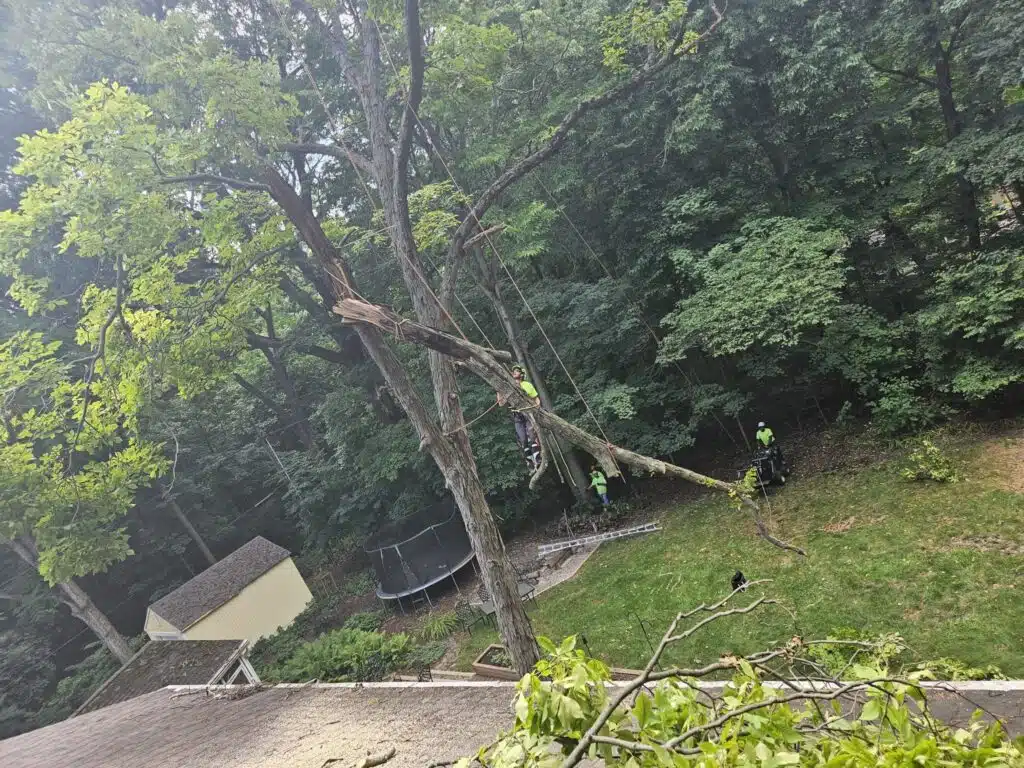
A summer storm in Central Indiana can leave storm-damaged trees leaning, split, or hung up in minutes. The first move is to stay back and look up, not to start cutting. Call for a storm-damaged tree assessment when anything looks off, and keep everyone clear of the yard until a certified arborist has assessed the tree.
Storms here tend to arrive fast. Straight-line wind, heavy rain, and saturated clay soil turn a healthy tree into a hazard in one afternoon, and storm damage to trees rarely looks as bad from the ground as it is. Damage during a storm can change a tree's structure before the full risk is visible. Knowing what you are looking at before anyone touches a chainsaw keeps the cleanup safe, protects the property, and keeps the insurance record clean.
What Storm Damage to Trees Looks Like: Tree Damage From the Ground
You do not need climbing gear to inspect a tree for serious damage. Walk the perimeter, well outside the drop zone, and check these signals. For the longer list, our guide on what signs a tree needs to be removed before it becomes a hazard goes deeper.
- The lean. Is the tree leaning more than it did before the storm? A lifted ring of soil or a heaved root plate means the root plate has started to shift. On the heavy clay around Fortville and Indianapolis, a root plate that held through a dry week can lose its grip in one wet afternoon, so a lean that has shifted is an emergency call, not a watch-and-wait case.
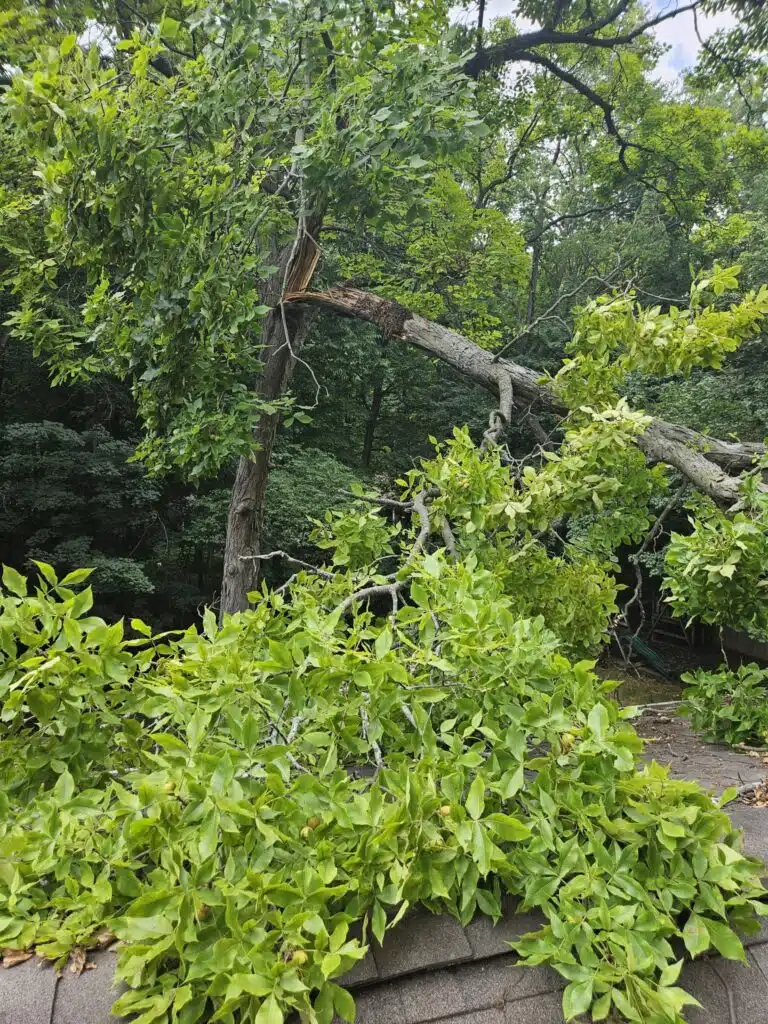
- The trunk and forks. A crack at a fork, a split down the trunk, or torn bark over a long vertical line is severe tree damage and means the tree is structurally compromised. Split and cracked trunks on damaged trees rarely recover.
- Broken branches. A broken limb hanging in the canopy stays hazardous until it is removed. It is never a ladder-and-pole-saw job: bound limbs hold tension that can cause serious injury. One clean break on a small outer branch usually moves to a scheduled assessment instead.
- Uplifted roots and exposed bark. An uprooted tree or bark stripped around the base can weaken the tree even when it still stands. Severe decay sets in at those wounds, pests move in, and the tree may fall weeks later.
Power Lines: The One Exception With No Exceptions for a Homeowner
If any limb touches, rests near, or hangs over power lines, stop and call the utility. Wire and wood do not mix, and utility crews handle lines while a tree service handles trees. This is the most dangerous cleanup a homeowner could attempt, and branches that entangle a wire are never a homeowner job.
What To Do Before Help Arrives to Protect Property
- Photograph everything. Shoot the tree from several angles for your insurance company before any debris is moved.
- Keep the drop zone clear. People and pets stay away from anything leaning or hung up, including the lawn beneath the damaged tree.
- Note what is loaded. Limbs resting on a roof, fence, or vehicle change the estimate, so point them out to the crew.
- Leave the debris alone. Cutting a bound limb while the tree is still loaded turns cleanup into injury.
- Hire a certified arborist. A tree service whose arborists are credentialed by the International Society of Arboriculture reads the whole tree, not just the visible break. Certified arborists tell you whether pruning can save it or tree removal is needed, and do it safely.
Prune, Save or Remove: How the Tree Pruning Call Is Made
High winds rarely kill a healthy tree outright. A certified arborist's assessment sorts the outcomes into three branches:
- Prune and save. Clean breaks, minimal canopy loss, and no trunk damage. Tree pruning removes the broken branches, and the tree recovers, often within one growing season.
- Monitor. Cosmetic damage, such as torn bark on a limb that still holds. Spot problems early, because decay and pests enter at every wound.
- Remove. A split trunk, a shifted root plate, or a tree now leaning toward a roof or driveway is unstable and unpredictable. Storm-damaged trees in this state come down on the crew's schedule, not after the next storm.
Right care after a storm matters as much as the first response. A tree that loses a branch in one storm usually holds the rest, but every wound on that tree is an entry point. An unpruned break left in the canopy invites decay, and decay is what turns today's repair into next year's removal.
Bottom Line: Assess First, Cut Second
Stay back, look up, photograph what you see, and keep the drop zone clear. Trees prone to lightning strikes or high winds need extra attention after every severe storm, and that is where ongoing tree care pays off. If a tree has already fallen, keep everyone off it until it has been made safe.
A moved lean, a split or cracked trunk, a hang-up, or anything near power lines is an emergency call. One dropped limb, or a clean wound on a reachable branch can usually wait for a scheduled assessment. More answers about storm damage and removal calls are on our FAQ page.
Quick Answers About Storm-Damaged Trees
Should I remove a storm-damaged tree right away? Not always. A tree that leans with a shifted root plate, splits down the stem, or touches lines needs emergency service. A single broken branch on a standing tree usually waits for a scheduled visit.
Will a damaged tree recover on its own? Small branch wounds close over time, but torn bark, a cracked fork, or root damage invites decay, so a tree service should inspect every tree after a storm.
Does insurance cover storm damage to trees? Most policies cover removal when the tree damages a covered structure, like your roof or a fence. Photograph everything first and keep the debris untouched until the adjuster has seen it.
Can I cut up a fallen limb myself? Never while any part of the tree is bound, loaded, or hung up. Tension in wood is what turns cleanup into injury. Leave cutting to the crew.
When to Hire Help for Storm Damage
Broken Oak Tree Service handles storm damage across Fortville and the greater Indianapolis area, from emergency takedowns to scheduled pruning and full tree removal. If a storm left a tree leaning, split, or hanging over your property, call first and keep everyone clear: we will assess it, make it safe, and tell you plainly what comes next. You can also read what local homeowners say about our work on our Google Business Profile.
Key Takeaways
- Stay back and photograph the damage before anyone touches the tree.
- A shifted lean, cracked stem, or hang-up is an emergency, not a cleanup project.
- Power lines make the tree the utility's job, always.
- Bound limbs hold tension, so leave the debris alone until help arrives.
- A certified arborist decides whether to prune, monitor, or remove.
- Every wound invites decay, so schedule the follow-up visit even when the tree looks fine.


